Ah yes, that one controversial bible story

Probably the most controversial story in the entire Bible is God ordering Abraham to kill his firstborn son, Isaac. This story, recounted in Genesis 22, tells us that God commanded Abraham to offer Isaac as a burnt offering on a mountain of His choosing. When Abraham brought Isaac with him on the mountain, he bound Isaac to the table, but just as he raised the knife to kill him, the angel of the Lord called down and told Abraham to stop what he was doing. Abraham then notices a ram in the thickets and, recognizing it as God’s providence, offers the ram as a sacrifice on the altar instead of Isaac.

 On the third day Abraham lifted up his eyes and saw the place from afar.  Then Abraham said to his young men, “Stay here with the donkey; I and the boy will go over there and worship and come again to you.”  And Abraham took the wood of the burnt offering and laid it on Isaac his son. And he took in his hand the fire and the knife. So they went both of them together. And Isaac said to his father Abraham, “My father!” And he said, “Here I am, my son.” He said, “Behold, the fire and the wood, but where is the lamb for a burnt offering?” Abraham said, “God will provide for himself the lamb for a burnt offering, my son.” So they went both of them together.

 When they came to the place of which God had told him, Abraham built the altar there and laid the wood in order and bound Isaac his son and laid him on the altar, on top of the wood. Then Abraham reached out his hand and took the knife to slaughter his son.  But the angel of the LORD called to him from heaven and said, “Abraham, Abraham!” And he said, “Here I am.”  He said, “Do not lay your hand on the boy or do anything to him, for now I know that you fear God, seeing you have not withheld your son, your only son, from me.” And Abraham lifted up his eyes and looked, and behold, behind him was a ram, caught in a thicket by his horns. And Abraham went and took the ram and offered it up as a burnt offering instead of his son.  So Abraham called the name of that place, “The LORD will provide”; as it is said to this day, “On the mount of the LORD it shall be provided.” – Genesis 22:4-14

Criticisms abound with this story and how it portrays God’s character, with some labelling it a “diabolical request” that puts a blameless victim in a horrific moral conflict. Others also argue that it paints Abraham in a horrible light as well, as a “morally insensitive servant” who was willing to kill his son without a second thought. Some biblical scholars also argue that this passage contradicts God’s later opposition to child sacrifice, as mentioned here.

I’d be lying if I said I didn’t understand the criticisms. Even though the story did end with God stopping Abraham from sacrificing Isaac, just the fact that He commanded Abraham to do it at all is something many people wrestle with, including millions of Christians. This isn’t something we as believers can just gloss over. 

That being said, I also want to provide a different perspective than a lot of Christians have given in response to criticism levied against this story. Many have argued that this story demonstrates how we ought to put God above all else, even family. That our love for God should eclipse all else in our lives. While I certainly agree with that sentiment, and it’s definitely scriptural (Deuteronomy 6:5, Matthew 10:37, Matthew 19:29), I don’t think that’s the point of Genesis 22. In fact, I think it does more harm than good to look at the story that way. 

Instead, we need to look at Genesis 22 in its full context – not just the context of the chapter itself (especially considering that “chapters” weren’t really in the minds of the authors who wrote the books of the Bible) but of Abrahams story leading up to this point. Abraham was promised the entire land of Canaan in Genesis 12:1-2: 

The Lord had said to Abram, “Go from your country, your people and your father’s household to the land I will show you.

“I will make you into a great nation,
    and I will bless you;
I will make your name great,
    and you will be a blessing.

This promise is reiterated in Genesis 15:5, where God tells Abraham that his offspring will be as numerous as the stars in the sky, and “counts it as righteousness” when Abraham simply believes the promise despite his old age and lack of children. Of Isaac specifically, God says in Genesis 17:16 and 19 that he will be made into a great nation, whose lineage will include kings. And if Genesis 15:6 is anything to go by, Abraham surely believed this – after all, if he could believe BEFORE he became a father, it must have been much easier to believe after the fact!

Why am I pointing all of this out, though? Because it gives us a crucial bit of context that paints Abrahams actions in Genesis 22 in a new light. Context that is even provided millenia later, in Hebrews 11:18-19:

God had said, “The descendants I promised you will be from Isaac.” Abraham believed that God could raise the dead, and really, it was as if Abraham got Isaac back from death.

“It was as if Abraham got Isaac back from death.”

Abraham had enough faith to know that the same God that made a covenant with him to provide as many descendants as the stars in the sky, could bring his son back to life. And indeed, Abraham had no reason not to believe God would do this, since God told him that this promise would come through Isaac. Awfully hard for your lineage to include kings, if you’re dead before you have a son of your own!

Abraham understood this, and understood that even if God commanded him to kill Isaac, that he wouldn’t be separated from his son for too long. Abraham knew that one way or another, Isaacs death would be far from permanent, that God would deliver him from the clutches of death. That, in my humble opinion, is the test that Abraham had to pass by laying his son on the altar. It was never a question of, “You must be willing to kill your son to show that you love me more.” (Far be it from God to test anyone in such a way, especially since He explicitly forbids child sacrifice!) Rather, the test was, “Do you have enough faith to believe that I can raise your child from the dead? That everything I’ve promised you will come true, even if it looks like you will be preventing it?”

But more than that – this story is, as many stories in the Old Testament are, a type and shadow of Jesus Christ himself. Think about it? A father who willingly sacrifices his own son, knowing that his son will be raised from the dead? The only difference, of course, is that unlike with Abraham, God the Father did not spare Himself the pain of having his own Son taste death. If only temporarily. He intervened and provided a ram instead.

Conclusion

Genesis 22 is difficult to swallow for many people, believers included, and with good reason. It’s not an easy thing to read about sacrifice or even potential sacrifice of your own child to any god you may or may not believe in. But as I’ve said in my post Addressing Three Atheist Arguments, the focal point of the Christian religion is that death is not the end. It is not a roadblock to our life, merely a change of location, one that is not at all permanent from God the Father’s point of view. And with all that considered, I submit to you that this story does not, in fact, paint God as a monster.

Did Jesus Claim To Be God?

One of the biggest objections to Christianity is that Jesus Christ allegedly never claimed to be God in any of the Gospel accounts. People who argue this say that the idea of Jesus’ divinity was a later accretion, by either an apostle or some other theologian in church history. So to put this accusation to rest I’ve compiled a list of passages from Matthew, Mark, Luke and John that demonstrate that Jesus was God. This isn’t an exhaustive list, but I think what I’ve written here is enough to prove my argument. I’ll provide additional commentary as I see fit.

“Why does this Man speak blasphemies like this? Who can forgive sins but God alone?” But immediately, when Jesus perceived in His spirit that they reasoned thus within themselves, He said to them, “Why do you reason about these things in your hearts? Which is easier, to say to the paralytic, ‘Your sins are forgiven you,’ or to say, ‘Arise, take up your bed and walk’?  But that you may know that the Son of Man has power on earth to forgive sins”—He said to the paralytic,  “I say to you, arise, take up your bed, and go to your house.”  Immediately he arose, took up the bed, and went out in the presence of them all, so that all were amazed and glorified God, saying, “We never saw anything like this!” – Mark 2:7-12

Seeing their faith, He said, “Friend, your sins are forgiven you.” The scribes and the Pharisees began to reason, saying, “Who is this man who speaks blasphemies? Who can forgive sins, but God alone?” But Jesus, aware of their reasonings, answered and said to them, “Why are you reasoning in your hearts? “Which is easier, to say, ‘Your sins have been forgiven you,’ or to say, ‘Get up and walk’? “But, so that you may know that the Son of Man has authority on earth to forgive sins,”—He said to the paralytic—“I say to you, get up, and pick up your stretcher and go home.” Immediately he got up before them, and picked up what he had been lying on, and went home glorifying God. They were all struck with astonishment and began glorifying God; and they were filled with fear, saying, “We have seen remarkable things today.” – Luke 5:20-26

This instance clearly demonstrates that Jesus was God for two reasons.

First, when the Pharisees accuse him of blasphemy by claiming to be God, Jesus doesn’t deny the accusation. In fact, he affirms his authority to forgive sins, an authority every Jew both then and now understood to belong to God alone. If this was not a claim to be God, the Pharisees would never have accused him of blasphemy – and thus, would never have attempted to stone him or have him crucified.

Second, when Jesus heals the man, he doesn’t appeal to any authority other than himself. In the Old Testament when healings were performed, the healer had to rely on God’s power to accomplish it. Jesus uniquely does not require reliance on any power but his own to perform healings, which is further evidence of his divinity.

Then those who were in the boat came and worshiped Him, saying, “Truly You are the Son of God.” – Matthew 14:33.

“And as they went to tell His disciples, behold, Jesus met them, saying, “Rejoice!” So they came and held Him by the feet and worshiped Him.” – Matthew 28:9

“When they [the disciples] saw Him, they worshiped Him, but some doubted.” – Matthew 28:17

Notice that Jesus accepted his disciples’ worship without correcting them, showing that he saw himself as equal with God. The Greek word used here for worship, proskuneo, is used when Jesus affirms that God alone is to be worshipped (Matthew 4:10), and when an angel rebukes the apostle John for almost worshipping him, saying that kind of reverence is for God alone. (Revelation 22:9.)

The Jews picked up stones again to stone Him. Jesus answered them, “I showed you many good works from the Father; for which of them are you stoning Me?” The Jews answered Him, “For a good work we do not stone You, but for blasphemy; and because You, being a man, make Yourself out to be God.” Jesus answered them, “Has it not been written in your Law, ‘I SAID, YOU ARE GODS’? “If he called them gods, to whom the word of God came (and the Scripture cannot be broken), do you say of Him, whom the Father sanctified and sent into the world, ‘You are blaspheming,’ because I said, ‘I am the Son of God’? “If I do not do the works of My Father, do not believe Me; but if I do them, though you do not believe Me, believe the works, so that you may know and understand that the Father is in Me, and I in the Father.” Therefore they were seeking again to seize Him, and He eluded their grasp.” – John 10:31-39.

“Then Jesus said to Thomas, “Put your finger here and look at My hands. Reach out your hand and put it into My side. Stop doubting and believe.” Thomas replied, “My Lord and my God!” Jesus said to him, Because you have seen Me, you have believed; blessed are those who have not seen and yet have believed.” – John 20:27-29.

As with before, note the lack of correction on Jesus’ part. He does not contradict Thomas when Thomas calls him “My God.”

“The Jews said to Him, “Now we know that You have a demon. Abraham died, and the prophets also; and You say, ‘If anyone keeps My word, he will never taste of death.’ “Surely You are not greater than our father Abraham, who died? The prophets died too; whom do You make Yourself out to be?” Jesus answered, “If I glorify Myself, My glory is nothing; it is My Father who glorifies Me, of whom you say, ‘He is our God’; and you have not come to know Him, but I know Him; and if I say that I do not know Him, I will be a liar like you, but I do know Him and keep His word. “Your father Abraham rejoiced to see My day, and he saw it and was glad.” So the Jews said to Him, “You are not yet fifty years old, and have You seen Abraham?” Jesus said to them, “Truly, truly, I say to you, before Abraham was born, I am.” Therefore they picked up stones to throw at Him, but Jesus hid Himself and went out of the temple.” – John 8:52-59

The “I am” statement Jesus uses here are the same words God uses to describe Himself to Moses in Exodus 3:14. In the Jewish culture of that day, such a statement would be interpreted as a claim to be God. Again, if Jesus didn’t mean that, the Pharisees would never have tried to stone him. 

Conclusion

Jesus Christ didn’t go around telling people, “I am God, second person of the Holy Trinity” during his years on Earth. But as demonstrated above, that wasn’t necessary at all for him to show that he was God incarnate. To deny that Jesus claimed to be God would be like saying a man who walked up to you and said, “You’re under arrest. Put your hands behind your back. You have the right to remain silent…” never claimed to be a police officer. Jesus’ words and actions (and in some cases, lack of action) showed that he saw himself as being equal to God, and this was understood by his apostles and by every Christian that’s ever lived since. 

Addressing Three Common Atheist Arguments

For those who don’t know, Alyssa Grenfell is a popular Youtuber who’s famous for her story of leaving the Mormon church. Much of her content is focused on critiquing LDS beliefs and practices, but occasionally she talks about how her worldview has changed and why she’s an atheist. I recommend you check out her channel. I think you’ll find her videos interesting, especially if you’re also an ex Mormon. 

Today though I wanted to address her reasons for being an atheist, since these are arguments I often see levied against Christians in atheist vs theist discussions. I’ll outline them below:

  1. “Most people are the religion of their parents.”

This is one of the most popular arguments against Christianity, and religion in general. Basically the idea is that all or most religious people only believe what they do because their parents taught it to them, and not for intellectually pure reasons. But there are two problems with this position.

First of all, even if it was true that the majority of religious people are only believers because of their parents’ upbringing, that wouldn’t prove their religion false. In Alyssa’s case she’s raising her children in a secular household, but if they grew up to be atheist because of their upbringing that wouldn’t prove atheism false. For another example, there are plenty of people out there who can’t defend their belief in the theory of evolution. They only believe it because it’s what they were taught in schools, but it would be absurd to say that’s proof that evolution is false. It’s actually a subtle form of ad hominem: Ad hominem circumstantial, where you attack the personal circumstances of someone making an argument rather than directly addressing the argument itself.

For a Christian, you need to prove that Jesus didn’t rise from the dead to show why their religion is false. Simply saying, “You believe it because your parents taught you” isn’t an argument.

Second, the idea that if one religion were true everyone would convert to it ignores factors like cultural conditioning, personal biases, and free will. In Christianity’s case, the fact that everyone has not converted to it doesn’t prove that it isn’t true or even isn’t obviously true. Many people simply haven’t had the opportunity to hear the Gospel, in which case God will judge them fairly based on the limited knowledge they have. Or they don’t believe simply because they don’t want to. Of course I’m not saying people CAN’T have good reasons for not believing, but I would argue that Christianity’s truth is evident enough to those with an open mind. Particularly since every secular explanation for the resurrection of Jesus Christ falls apart on closer inspection. (Although that’s a post for another time.)

But more than that, I can flip this argument around: If there obviously was no God and religion was obviously nonsense, why does 80 percent of the human population believe?

  1. “If God is good, why is there evil in the world?”

Alyssa doesn’t use this exact phrasing, but her argument stems from this line of thinking. She uses the example of God supposedly saving a baby from dying while other babies die in poverty as proof that if there was a God, he’d be a horrible person. 

To be fair, this is something a lot of believers wrestle with as well. The problem of evil has been a struggle for many people across many religions, and the unfairness of life is even addressed in Scripture (Psalm 73.) I don’t think you’ll find any serious Christian who denies this reality and hasn’t struggled with it. So I want to approach this topic with extra sensitivity. 

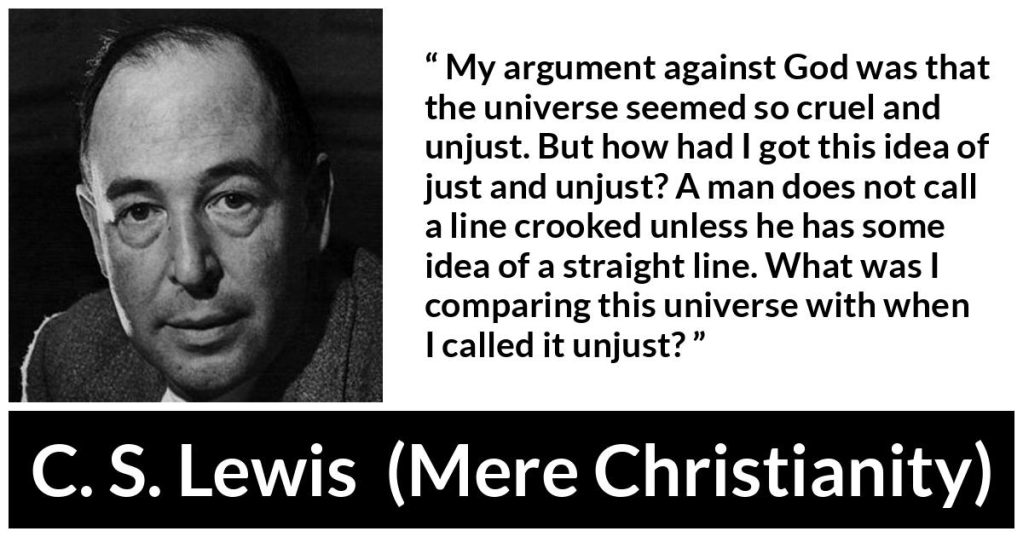
That being said, this too can be countered by another question, one that C.S. Lewis articulates perfectly: 

If there is no God, no transcendent value to anything, and what we call “good” or “evil” is just a chemical reaction in our brains shaped by millions of years of randomized, chaotic evolution…what real difference is there between a baby being saved and it dying? Someone asserting that the suffering we see in this world is consistent with a perfectly good God existing is no less objectively correct than Alyssa’s claim that it isn’t.

But even then, if Christianity is true, then death isn’t the end. We don’t “die”, per se, we just change locations. So even the baby who dies in poverty will experience the same eternal rest and consolation of the baby whose life was saved. Again I know this is a very sensitive topic and I don’t want to minimize the suffering of anyone who’s lost a child, but I’d ask that whoever poses this question at least seriously look at it through a theistic lens before dismissing religion as nonsense because of it. 

  1. “There is no evidence for God.”

This is probably the most common argument you’ll hear from atheists. If you are a theist debating an atheist, nine times out of ten you’ll hear them say God doesn’t exist because there’s no evidence for it. 

I don’t want to sound rude, but this is just a lazy assertion. The reason I say this is because whenever the point is made that there’s no evidence for God’s existence, there’s never a clear criteria given for what would qualify as evidence that God exists. Some people like CS Lewis converted because of the argument from morality. Others like Lee Strobel converted when they examined the historical evidence for Christs’ resurrection. Still others convert when they see the vast order and complexity of the universe, convinced that there’s a creative mind behind it. These people have a clear idea of what constitutes evidence that God exists, but if the atheist presenting this question can’t provide that, then there’s no discussion to be had. 

Alyssa then argues that when her believer friends talk about miracles happening in their lives, there’s always a more logical explanation than God or the supernatural. I’m not sure what miraculous stories she’s heard, but from what I’ve seen, stage 4 cancer being healed after prayer, convincing even the secular doctor taking care of the patient that something supernatural is going on isn’t something that can be explained in a lot of other ways. 

Conclusion

I don’t mean any offense to Alyssa in writing this post. Like I said I recommend you check out her channel, including her Youtube short that I linked above. The reason I’m responding to her arguments for atheism is because these are some of the most common arguments I hear atheists make, and I thought it was an easy opportunity for me to give my rebuttal to them. 

I hope you enjoyed reading, and if you’re an atheist, that this post at least gave you something to think about.