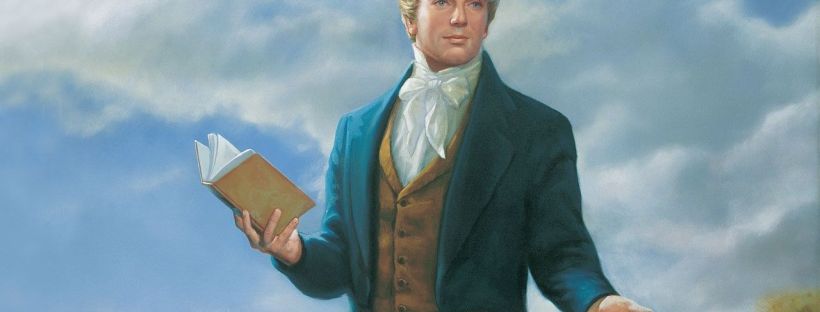
The Mormon church has experienced quite a bit of growth over the past several years, and with that growth has come the birth (or perhaps rebirth) of LDS apologetics and online influencers. This has sparked major debates between Mormons and members of other faiths or no faith at all. It has also sparked the creation of major online accounts on Youtube and other platforms critiquing the Mormon church by ex-members. Most importantly, from my perspective, it’s sparked intense debate between Latter Day saints and members of mainstream Christian denominations. One of these debates is a particularly fascinating dialogue between Gavin Ortlund and Jacob Hansen on the Trinity, if you’re interested feel free to check it out HERE.
Today though I wanted to give my perspective on the Mormon religion and why I don’t believe in it, nor consider it a genuine expression of the Christian faith. Growing up I was told by other Christians that they believed a lot of crazy things like having a bunch of kids is necessary so that “alien spirits” can possess them. Having studied Mormonism more thoroughly I’ve shed a lot of the misconceptions, but my main reason for rejecting it is their stance on the Trinity.
To put it simply, Mormons don’t believe in the Trinity. They believe that God the Father, Jesus Christ and the Holy Spirit are part of the “Godhead”, meaning that they share the same doctrine and purpose, but they are not one in nature. The Trinity teaches that the Father, Son and Holy Spirit are indeed three distinct persons but also sharing one indivisible divine nature. Unpacking the doctrine of the Trinity and explaining why it’s an orthodox Christian belief however requires a separate post, so I’ll save that for another time.
Back to the Mormon view of the Godhead, their interpretation of the Father, Son and Holy Spirit’s relationship I think is demonstrated clearly in these quotes from various elders:
“Latter-day Saints pray to God the Father in the name of Jesus Christ. They acknowledge the Father as the ultimate object of their worship, the Son as Lord and Redeemer, and the Holy Spirit as the messenger and revealer of the Father and the Son. But where Latter-day Saints differ from other Christian religions is in their belief that God and Jesus Christ are glorified, physical beings and that each member of the Godhead is a separate being. The true doctrine of the Godhead was lost in the apostasy that followed the Savior’s mortal ministry and the deaths of His Apostles.- churchofjesuschrist.org., “Godhead.”
“We do not believe in what the Christian world calls the doctrine of the Holy Trinity. In his First Vision, Joseph Smith saw two distinct personages, two beings, thus clarifying that the then-prevailing beliefs concerning God and the Godhead were not true…We know that the three members of the Godhead are separate and distinct beings. We know this from instruction given by the Prophet Joseph Smith: “The Father has a body of flesh and bones as tangible as man’s; the Son also; but the Holy Ghost has not a body of flesh and bones, but is a personage of Spirit.” – Dallin H. Oaks, “The Godhead and the Plan of Salvation.”
“We declare it is self-evident from the scriptures that the Father, the Son, and the Holy Ghost are separate persons, three divine beings, noting such unequivocal illustrations as the Savior’s great Intercessory Prayer just mentioned, His baptism at the hands of John, the experience on the Mount of Transfiguration, and the martyrdom of Stephen—to name just four.” – Jeffrey R Holland, “The Only True God And Jesus Christ Whom He Hath Sent.”
Contrary to the doctrine of the Trinity, the Mormon church confesses that the Father, Son, and Holy Spirit are completely separate beings that don’t share the same divine substance. Scripture though paints a much different picture, starting at the very first chapter of Genesis:
“Then God said, “Let us make mankind in our image, in our likeness, so that they may rule over the fish in the sea and the birds in the sky, over the livestock and all the wild animals,[a] and over all the creatures that move along the ground. So God created mankind in his own image in the image of God he created them; male and female he created them.” – Genesis 1:26-27
“I and the Father are one.” – John 10:30.
“For there are three that bear witness in heaven: the Father, the Word, and the Holy Spirit; and these three are one.” – 1 John 5:7 (Note: this passage only exists in the KJV, but that’s the version that the Mormon church uses for their copies of the Old and New Testament.)
This is far from an exhaustive list, but I choose these verses specifically because they demonstrate how the Father, Son, and Holy Spirit are one. When you take passages like these alongside Jesus praying to the Father, Him being seated at the right hand of God at Stephens martyrdom, and all three persons of the Trinity being present at His baptism (as mentioned by Holland above), you get a good foundation for what we Christians refer to as the Trinity. I should mention that Latter Day saints don’t ignore verses like these, some people will set you up for making you look silly by not pointing that out.
Rather, they’ll argue that while the Father, Son and Holy Spirit are “one” in the sense of having one purpose, they aren’t one being. Notice though that in Genesis 1:27 after God says He’ll make man in “His own image”, alongside “our image” in verse 26. This shows a singularity between the Father, Son and Holy Spirit along with the distinct personages referenced in the previous verses. If verses talking about the Father, Son, and Holy Spirit being “one” meant that they shared one purpose, these texts would’ve said so.
More than that however, I want to call attention to what might be the biggest defeater for the Mormon church’s interpretation/rejection of the Trinity: The Book of Mormon itself.
“An Angel prophesies: ‘For behold, the time cometh, and is not far distant, that with power, the Lord Omnipotent who reigneth, who was, and is from all eternity to all eternity, shall come down from heaven among the children of men…And he shall be called Jesus Christ, the Son of God, the Father of heaven and earth, the Creator of all things from the beginning…” Mosiah 3:5-8
“Amulek declares: ‘Now Zeezrom saith again unto him: Is the Son of God the very Eternal Father? And Amulek said unto him: Yeah, he is the very Eternal Father of heaven and of earth, and all things which in them are; he is the beginning and the end, the first and the last.” – Alma 11:38-39
“The resurrected Jesus speaks to the Nephites: ‘Arise and come forth unto me, that ye may thrust your hands into my side, and also that ye may feel the prints of the nails in my hands and in my feet, that ye may know that I am the God of Israel, and the God of the whole earth, and have been slain for the sins of the whole world.” – 3 Nephi 11:14
“Samuel the Lamanite prophesies:…’and ye shall know of his coming and know of the coming of Jesus Christ, the Son of God, the Father of heaven and of earth, the Creator of all things from the beginning.” – Helaman 14:12
“Behold, I am he who was prepared from the foundation of the world to redeem my people. Behold, I am Jesus Christ. I am the Father and the Son. In me shall all mankind have life, and that eternally, even they who shall believe on my name; and they shall become my sons and my daughters.” – Ether 3:14
“And now, behold, this is the doctrine of Christ, and the only and true doctrine of the Father, and of the Son, and of the Holy Ghost, which is one God, without end. Amen.” – 2 Nephi 31:21
“And he hath brought to pass the redemption of the world, whereby he that is found guiltless before him at the judgment day hath it given unto him to dwell in the presence of God in his kingdom, to sing ceaseless praises with the choirs above, unto the Father, and unto the Son, and unto the Holy Ghost, which are one God, in a state of happiness which hath no end.” – Mormon 7:7
These verses clearly speak of the Father, Son and Holy Spirit as distinct persons but consisting of one being, not three distinct persons with one purpose. Jesus is said to be the Father, and all three persons of the Trinity are said to be one God.
Conclusion
When speaking with Mormon missionaries, you’ll often be told to prayerfully read the Book of Mormon with an open mind and heart. This, they say, will lead you to realize that the Book of Mormon is true and another testament of Jesus Christ. But as shown above, if you were to take what it says about Jesus’ divinity and the Father, Son and Holy Spirit, it will likely lead you to a Trinitarian understanding of God that flies in the face of what the Mormon church has taught elsewhere. Of course I don’t accept that the Book of Mormon is another testament we can add to the Bible, but if I did, I’d be grateful for the further prooftexts that demonstrate the truth of the Trinity.
If you’re a Latter Day saint, I’d encourage your feedback on this post. I welcome comments and (constructive) criticism, and if there’s anything I may have missed in my critique of your religion, please let me know. For now though I think the reasons I’ve outlined above are sufficient not to accept Mormonism as an authentic expression of the Christian faith.
 The Armchair Apologist